
Have you been offered a rate-lock annuity? Before you say yes, you need to know what it really means.
My name is Marty Becker. I own Atlas Financial Strategies in St. Louis, Missouri. My team helps people find safe ways to grow and protect their money for retirement. Today, I want to walk you through the truth about rate-lock annuities — the good parts, the bad parts, and the parts that can trip you up.
What Is a Fixed Indexed Annuity?
Most people already know the basic idea. A fixed indexed annuity is not put straight into the stock market. That means:
- If the market goes down, your annuity does not lose value because of that drop.
- If the market goes up, the insurance company may add interest to your account, based on a formula.
But there is a small detail that often gets buried in the paperwork. The cap, the participation rate, or the spread — these are all parts of that formula — can change every year. The number you see today might not be the same number you get next year.
This raises two big questions:
- Why do insurance companies change these rates?
- Is a rate-lock annuity — one that locks in that rate — automatically the better choice?
Is a Rate-Lock Annuity Always a Better Deal?
The short answer is no.
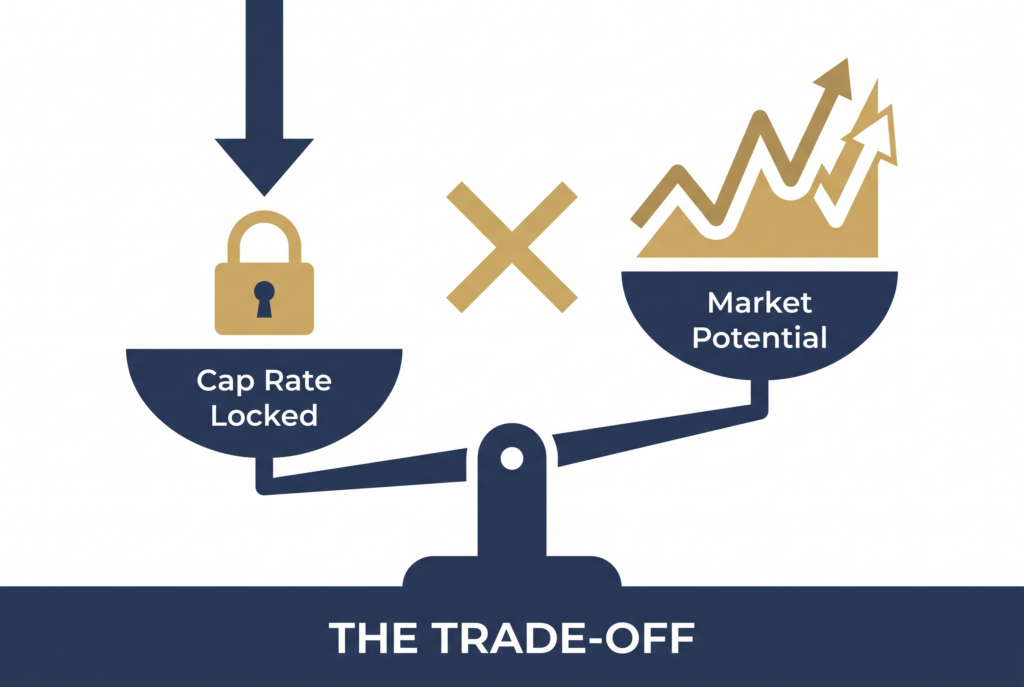
A rate lock can be very valuable. But it is not free. There is always a trade-off. Here is why:
- A rate lock does not guarantee how the index performs.
- A rate lock does not guarantee your annuity’s total return.
- A rate lock only guarantees one single part of the formula — like the cap.
Think of it like locking in the price of one ingredient in a recipe. It doesn’t mean the whole meal turns out exactly the way you want.
The 3 Different Types of “Rate Lock”
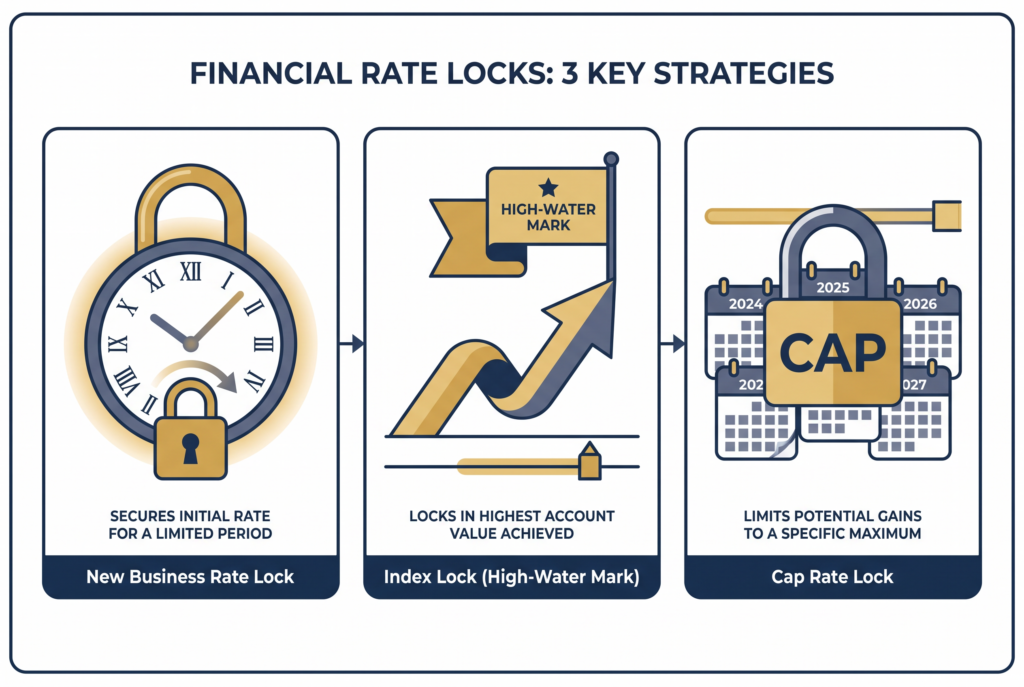
Here is where things get confusing. The words “rate lock” get used in three different ways. Each one means something different. You need to know which one you are being offered.
| Type of Lock | What It Actually Protects | When It Applies |
|---|---|---|
| New Business Rate Lock | Protects an advertised rate | While your application or money transfer is being processed |
| Index Lock (High-Water Mark) | Locks in a positive index value or credit | Before the end of the crediting period or your anniversary date |
| Cap Rate Lock | Guarantees your cap rate stays the same | For a stated number of years, sometimes a full 5- or 7-year surrender period |
These are three very different promises. When someone offers you a “rate lock,” always ask:
- Which cap is locked?
- For how long?
- Where is that promise written in the contract?
How Does a Fixed Indexed Annuity Actually Earn Interest?
Let’s slow down and look at a simple, real example. Many fixed indexed annuities use something called an annual point-to-point strategy. Here’s how it works:
- The insurance company takes a “snapshot” of the index on the day your policy starts.
- Twelve months later, they take another snapshot.
- The difference between those two snapshots decides your interest — up to a cap.
Let’s say your annuity is tied to the S&P 500, with a 9% cap.
| If the Index Moves… | Your Annuity Earns… |
|---|---|
| Rises 6% | 6% |
| Rises 14% | 9% (capped) |
| Falls 12% | Generally 0% (not negative) |
This is the real trade-off of a fixed indexed annuity. You are protected from index losses. But your gains are limited by the cap — and if that cap is “locked,” it simply means that ceiling stays the same for a set number of years, instead of changing every year.
The Bottom Line
A rate-lock annuity is not automatically good or bad. It depends entirely on:
- Which type of lock you’re being offered
- How long that lock lasts
- Whether the trade-off fits your goals
If you’ve been handed paperwork with the words “rate lock” on it, don’t guess what it means. Ask the right questions before you sign anything.
Not sure what your rate-lock annuity actually guarantees? Book a call with me and I’ll walk through your contract with you, line by line, so you know exactly what you’re getting.
Podcast Episode 112: Should You Buy a Rate-Lock Annuity? Watch This First
Download Episode 112: Should You Buy a Rate-Lock Annuity? Watch This First on Apple Podcast