
Last week, the stock market had a rough few days. The Nasdaq had its worst five-day stretch since June. A popular measure of fear in the market, called the VIX, jumped over 34%. And one of the biggest AI companies out there saw investors get very nervous about whether it could pay back its debt.
This is not a story about the sky falling. It is also not a story about everything being fine. It is a story about one important lesson called sequence of returns risk, and it matters a lot if you are within 5 to 10 years of retiring.
What Actually Happened
Here is what happened, in simple terms:
- Prices went up faster than expected. This is called inflation, and it was higher than people thought it would be.
- The very next day, a report came out showing it costs businesses a lot more money to make things. This was the biggest jump since 2022.
- Energy got expensive fast. Jet fuel is up over 100% in the last year. Diesel is up over 115%. This is part of why it costs more to fly or buy groceries, since trucks need diesel to deliver food.
- One of the biggest data center companies has taken on more than $50 billion in debt to keep building. Investors got so worried about this company that they are charging a high premium to insure against it defaulting. Its bond yields are now above 15%, and its stock dropped more than 25% in one week.
A Small Group of Stocks Is Holding Up the Whole Market
Here’s the part that should make anyone pause, no matter your age:
| What | Number |
|---|---|
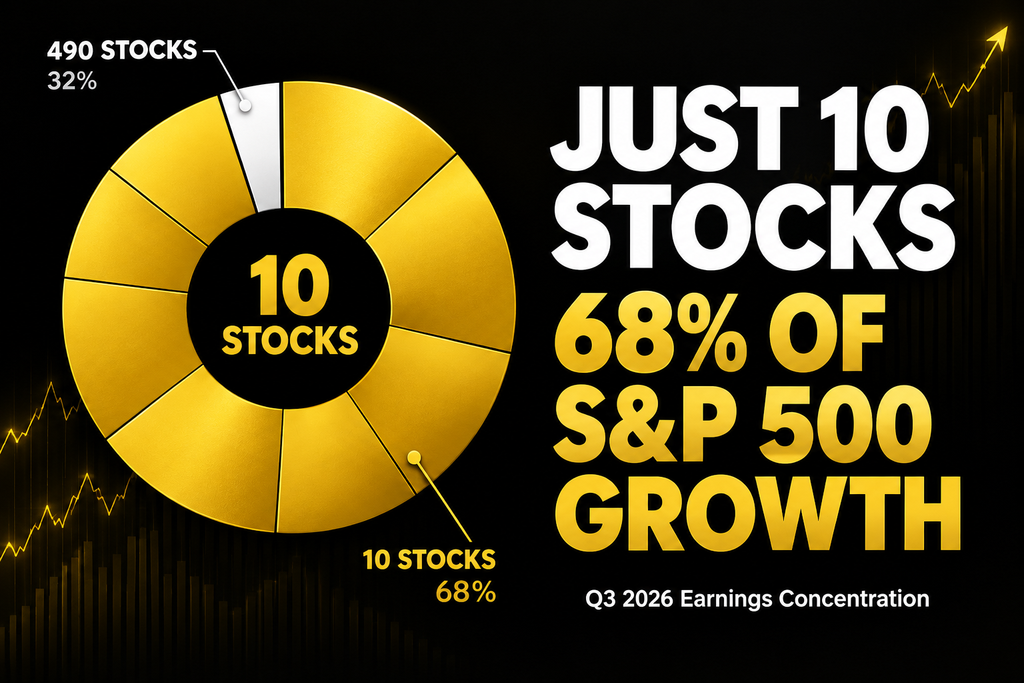
| Stocks expected to drive S&P 500 earnings growth next quarter | Just 10 |
| Share of total growth from those 10 stocks | 68% |
| Share of growth from just 2 of those stocks | Over 1/3 |
That means the market most people think they are invested in is really riding on the backs of a tiny handful of companies.
On top of that:
- Mortgage rates are near a three-year high, above 7%
- Home deals are falling apart at the highest rate since COVID
- Fund managers are more “all-in” on stocks than at almost any point in recent history, according to one major bank survey
None of this means a crash is guaranteed tomorrow. Nobody knows that, and anyone who tells you they know is lying to you.
Why Sequence of Returns Risk Matters More If You’re Near Retirement
If you are still working and putting money into a 401(k) or an IRA every couple of weeks, and you are 20 or 30 years from retiring, none of this really matters to you. Markets go up. Markets go down. You keep buying. You keep compounding. History says you will be just fine.
But if you are retired, or close to it, this is a completely different conversation, because this is exactly when sequence of returns risk becomes real.
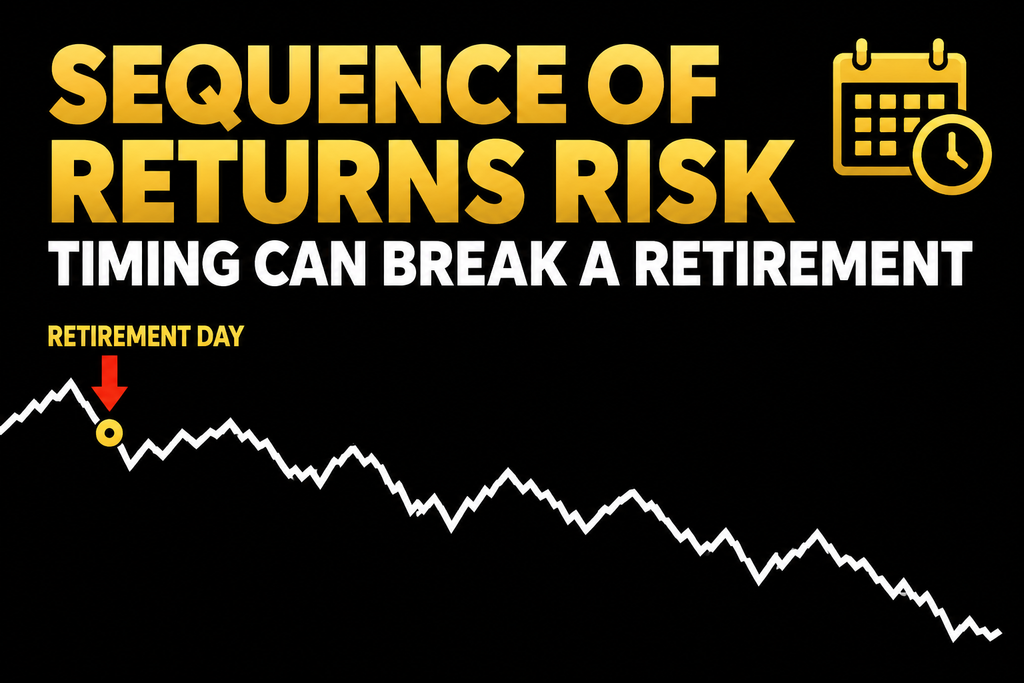
Here’s why: the thing that actually breaks a retirement plan is not simply “the market went down.” It’s the market went down right when you started pulling money out of your portfolio.
This has a name. It’s called sequence of returns risk, and I’ve talked about it on the podcast many times.
If you retire right as the market starts a couple of bad years in a row, your portfolio may never fully recover. Even if the market eventually reaches a new high later on, you are not buying in at the bottom anymore. You are selling at the bottom just to pay your bills. That is the trap of sequence of returns risk.
What we just saw — hot inflation, stress in company debt, record high stock positioning, a market propped up by 10 companies — is exactly the kind of setup that has led to trouble before. This is not a prediction that it will happen again. It is a reminder that the conditions for a bad sequence of returns exist right now.
And if you are relying on a high withdrawal rate from your portfolio the same month something like this happens, you don’t get a do-over.
What You Can Actually Control
Here’s the good news: you can’t control inflation. You can’t control the Fed. You can’t control what 10 tech companies report in their earnings. But you can control how much of your retirement income depends on all of that going perfectly — and how exposed you are to sequence of returns risk.
That is the entire idea behind a strategy like the Atlas Annuity Strategy:
- Take the income you absolutely need to live on, and guarantee it
- It doesn’t matter what one company’s credit default swaps are doing
- It doesn’t matter what the inflation report says
- It doesn’t matter if stocks have their worst week since June
Your lights stay on. Your mortgage gets paid. Your groceries get covered. Guaranteed, for the rest of your life.
Whatever money is left over — the amount you don’t need for day-to-day survival — can stay invested and actually benefit from this kind of market volatility over the long run, because you are never forced to sell during a downturn. This is how you take sequence of returns risk off the table entirely for the income you depend on.
That’s the whole philosophy. It’s not about predicting the next company in trouble or the next big winner. It’s about making sure a single headline can never decide whether you get to retire, or stay retired.
The One Question to Ask Yourself
This isn’t about trying to scare you, and it’s definitely not about trying to time the market. Nobody can do that — not me, not your advisor, not even Warren Buffett. He’ll tell you himself that you can’t time the market.
What weeks like this last one are good for is asking yourself one simple question:
If the market has a rough stretch the day after I retire, would my income survive it? Or would sequence of returns risk derail my entire plan?
If you don’t know the answer, that’s exactly what an Income Clarity Call is for. It’s free, with no obligation. We run your numbers and see whether the Atlas Annuity Strategy is a good fit for protecting you against sequence of returns risk.
Podcast Episode 120: Sequence of Returns Risk: The Hidden Threat to Your Retirement
Download Episode 120: Sequence of Returns Risk: The Hidden Threat to Your Retirement
on Apple Podcast